
The 2026.1 release of TAITherm, CoTherm, and MuSES delivers a new wave of enhancements that push the boundaries of simulation accuracy, workflow automation, and defense modeling. This update brings expanded capabilities for human comfort analysis, advanced electrification workflows, and robust infrastructure improvements—empowering engineers to design smarter, safer, and more resilient systems.
TAITherm 2026.1: Better Connectivity for Human, Cabin, and Battery Workflows
With 2026.1, TAITherm continues to evolve as a comprehensive platform for thermal and comfort simulation. This release introduces targeted improvements for cabin and human modeling, electrical system analysis, and defense applications.
Cabin and Human Enhancements
-
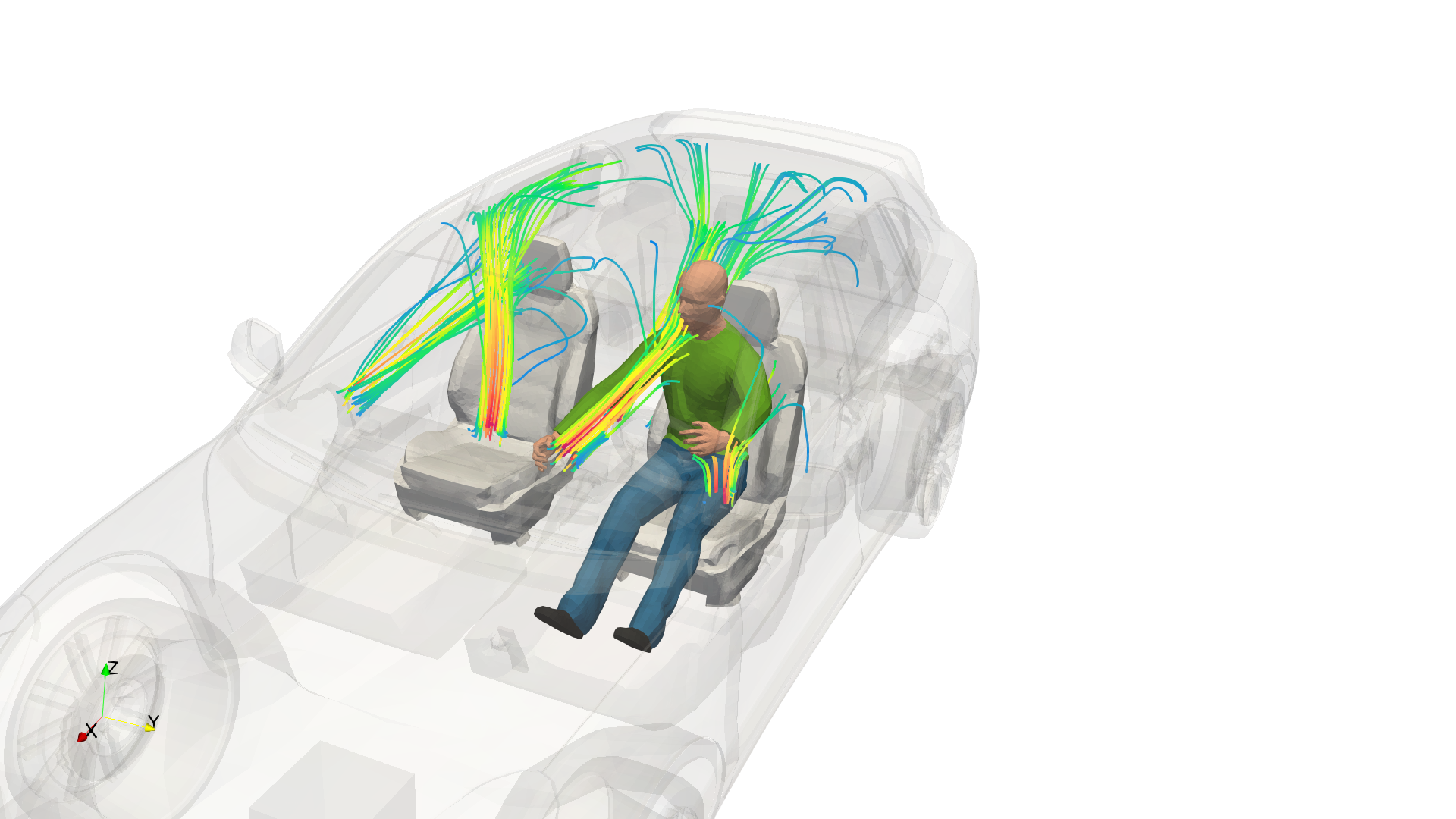
Improved Cabin-Human Coupling: Additional input/output coupling parameters enhance the integration between cabin and human models. This enables more accurate simulation of real-world comfort scenarios, supporting advanced HVAC and occupant-focused design and system energy analysis.
-
RapidFlow Volume Flow Inlet: Cabin cooldown, heatup, and drive cycle analyses are now easier to set up with the specification of volume flow rates at inlets. This improves the previous capability, where the flow velocity had to be specified.
Electrical System Advancements
-
Battery Electrical Time Constant: Engineers can include battery state of charge when specifying time constants, enabling more precise analysis of battery thermal behavior and system response.
Defense Simulation Upgrades
-
Sea Surface Variability for AI Datasets: New capabilities allow for the simulation of variable sea surfaces, enhancing the realism and utility of AI training datasets for defense applications.

-
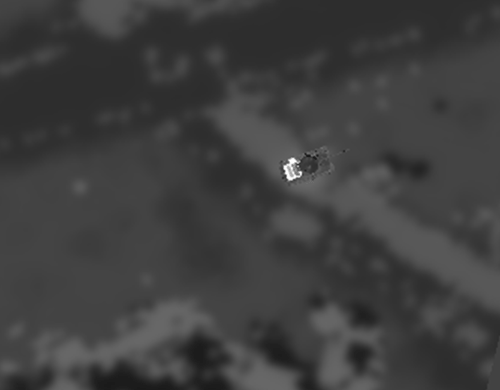
Blur Background Assemblies: Meshed backgrounds with coarse facets and variable properties are often used to provide clutter in renderings. Now, those facet boundaries can be blended by applying blurring to only the background parts, enhancing image realism and training accuracy.
-
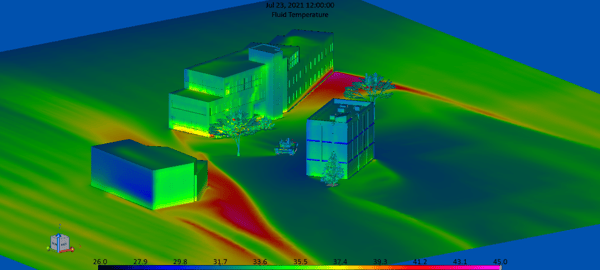
Localized Background Convection: Simulate an idling ground vehicle exhaust and cooling air heating the ground around it with the new convection options. Choose from any of the convection options previously available on standard parts – including imported CFD and RapidFlow.



CoTherm 2026.1: Stronger Data Access and Process Reliability
CoTherm 2026.1 introduces a suite of improvements aimed at streamlining simulation workflows and enhancing data connectivity.
TAITherm Connectivity
-
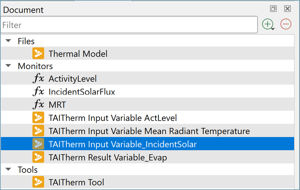
TAITherm Input/Result Variable Additions: Extended TAITherm variables to access new input/output parameter types that were added in this release. This data access streamlines coupling TAITherm Human Thermal models with environments simulated in other thermal models.
Workflow and Usability Enhancements
-
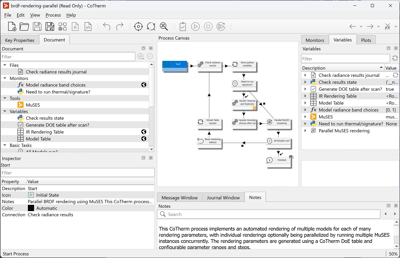
Bug Fixes and Example Process Improvements: Targeted bug fixes and updated example processes make it easier for users to get started and achieve reliable results.

Looking Ahead
With the 2026.1 release, ThermoAnalytics reaffirms its commitment to delivering high-fidelity simulation tools that keep pace with the evolving needs of automotive and defense industries. These enhancements empower engineers to achieve greater accuracy, efficiency, and innovation in their designs.
